

When people begin researching blepharoplasty, one of the first things they encounter is that not all eyelid surgery is the same. Some patients pursue it to restore their appearance — to look less tired, more alert, and more youthful. Others seek it because drooping upper eyelid skin has begun to affect their line of sight. Understanding the difference between functional blepharoplasty and cosmetic blepharoplasty matters before moving forward, and it shapes what to expect from the procedure and what the outcome will prioritize.
At Donath Facial Plastic Surgery in Cincinnati, OH, Dr. Alexander S. Donath performs cosmetic eyelid surgery with a focus on natural-looking rejuvenation — including through his signature LuxeEyes℠ procedure.
Eyelid Surgery at a Glance: Five Things to Know
- Blepharoplasty can be performed for functional reasons, cosmetic reasons, or both simultaneously.
- Functional blepharoplasty addresses upper eyelid skin that droops severely enough to impair vision.
- Cosmetic blepharoplasty improves the appearance of the eyes — targeting puffiness, excess skin, and signs of aging.
- Understanding which type applies to your situation helps set realistic expectations before your consultation.
- Choosing a facial plastic surgery specialist significantly influences the quality of your results.
What Is Functional Blepharoplasty?
Functional blepharoplasty is a form of upper eyelid surgery performed when excess eyelid skin droops to a degree that obstructs the upper visual field. This can develop gradually with age as skin loses elasticity and the eyelid muscle weakens, or it may appear earlier due to genetics.
The goal is not aesthetic — it is to restore a clear line of sight. Some patients also experience chronic forehead tension because they are unconsciously raising their brows to compensate for drooping upper eyelids. In documented cases of vision impairment, insurance may cover part of the cost, though patients should verify coverage directly with their carrier.
Signs that eyelid concerns may be functional include:
- A feeling of heaviness over the eyes, especially later in the day
- Upper visual field obstruction that worsens over time
- Habitually raising the brows to see more clearly, often resulting in eye strain or brow tension
What Is Cosmetic Blepharoplasty?
Cosmetic blepharoplasty is performed to improve the appearance of the eye area rather than to address a medical issue. Patients typically present with persistent under-eye puffiness, excess upper eyelid skin that creates a heavy or hooded look, diminished definition along the upper eyelid crease, or an overall fatigued appearance.
The procedure can be performed on the upper eyelids, lower eyelids, or both. Upper cosmetic blepharoplasty removes excess eyelid skin and, when present, addresses fat deposits that contribute to hooding. Lower blepharoplasty targets under-eye bags through either a subciliary incision just below the lash line or a transconjunctival approach — placed inside the lower eyelid with no visible external scar.
The result is a smoother, more open, and more youthful-looking eye area. Most patients describe their outcomes as looking more rested and alert — a meaningful improvement that complements the rest of the face without looking altered.
Before & After Photos
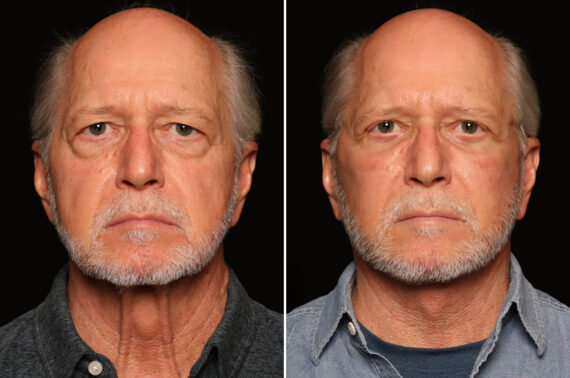
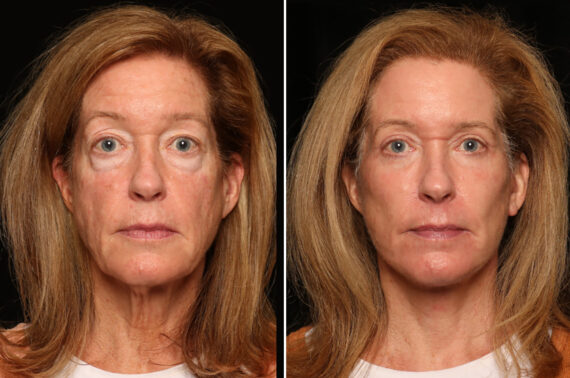
Each patient is unique and individual results may vary*.
Functional vs Cosmetic Blepharoplasty: Key Differences
The primary distinction is purpose. Functional blepharoplasty serves a medical need; cosmetic blepharoplasty serves an aesthetic one. This also affects how each is evaluated — functional candidates typically undergo a visual field test to document the degree of obstruction, while cosmetic evaluations center on skin quality, fat distribution, and the patient’s goals.
Insurance generally does not cover cosmetic blepharoplasty. Functional blepharoplasty may qualify for partial coverage when vision impairment is documented.
Potential side effects are similar for both blepharoplasty procedures and may include temporary swelling and bruising, dryness or light sensitivity, and in rare cases, infection, bleeding, or asymmetry in healing.
How to Know Which Type of Eyelid Surgery You Need
Signs Your Eyelids May Be Affecting Your Vision
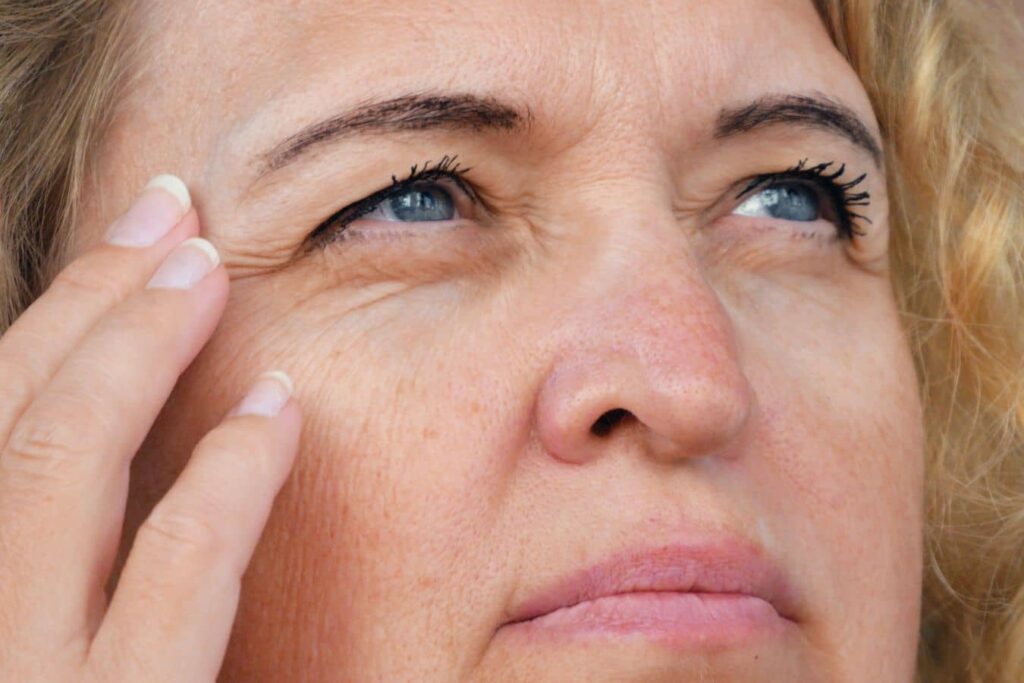
Patients who notice upper visual field narrowing, persistent eye heaviness, or the habit of raising their brows to see clearly may have a functional concern. A visual field test performed by an ophthalmologist or surgeon can determine whether the drooping meets the threshold for a functional classification.
Signs Your Eyelid Concerns Are Primarily Cosmetic
If vision is unaffected but the eyes appear tired, the upper eyelid skin looks heavy or hooded, or under-eye bags are present, those are cosmetic concerns. Cosmetic blepharoplasty is designed to address these concerns directly.
When It’s Both
A patient can have eyelid changes that are both functionally significant and cosmetically bothersome. In these cases, both goals can be addressed in a single procedure. An experienced surgeon will evaluate the full picture during a consultation and develop a plan that reflects the patient’s priorities.
Internationally Renowned
EXCELLENCE IN FACIAL COSMETIC SURGICAL

Why Choosing a Facial Plastic Surgery Specialist Matters
The eye area is among the most intricate and expressive parts of the face. Blepharoplasty here demands both technical precision and a refined understanding of how the eyelids relate to the brows, cheeks, and overall facial harmony.
Dr. Donath is a double board-certified facial plastic surgeon whose practice is devoted exclusively to the face, head, and neck. For patients who want to go beyond eyelid surgery alone, he offers LuxeEyes℠ — his signature procedure combining blepharoplasty with his VolumeLift℠ fat transfer technique. LuxeEyes℠ addresses excess skin, under-eye puffiness, and volume loss in the surrounding eye area for a more complete rejuvenation that blepharoplasty alone cannot achieve.
During a consultation, Dr. Donath will examine your eyelid skin, fat distribution, and facial structure, then recommend the approach — whether blepharoplasty, LuxeEyes℠, or an additional procedure like a brow lift or laser resurfacing — best suited to your goals.
When Is the Right Time to Consider Eyelid Surgery?
There is no single appropriate age. Patients in their thirties and forties sometimes develop early eyelid changes due to genetics or lifestyle factors. By the fifties, many patients present with a fuller picture of excess upper eyelid skin, lower lid puffiness, and volume loss that makes them strong candidates for cosmetic blepharoplasty or LuxeEyes℠.
The right time is generally when the concern has a meaningful impact on daily life — and when the patient is in good overall health with realistic expectations.
Schedule a Consultation With Dr. Alexander Donath in Cincinnati, OH
If you are considering eyelid surgery and want to understand which approach is right for you, a consultation with Dr. Donath is the best first step. He will evaluate your eyelids, discuss your vision and cosmetic goals, and recommend the procedure best suited to your anatomy.
Contact Donath Facial Plastic Surgery in Cincinnati, OH today to schedule your blepharoplasty consultation.