

Are you starting to notice subtle changes in your face, like sagging skin, deepening lines, or a tired appearance that doesn’t match how you feel inside? Facelift surgery is one of the most effective ways to reverse these signs of aging and restore a naturally youthful look. But many patients find themselves wondering: What is the best age for a facelift?
The answer isn’t one-size-fits-all, and that’s what makes the topic so interesting. Factors like skin elasticity, lifestyle, genetics, and personal goals all play a role. In this article, we’ll explore the age-related aspects of facelifts and help you understand when it might be the right time to take the next step toward facial rejuvenation.
What is the Average Age for a Facelift?
The average age for facelift surgery typically falls between 45 and 60 years old. This range represents a time when facial aging becomes more pronounced, and skin elasticity starts to diminish. While there’s no single “perfect age,” this window often offers the best balance between visible aging and still having enough skin elasticity to achieve optimal results. Ultimately, the decision depends on individual goals and how aging has impacted your appearance.
When Should You Get a Facelift? Signs to Look For
Facial aging is a gradual process, and many patients don’t realize how much their features have changed until the signs become more noticeable. Recognizing when it might be time for a facelift procedure can help you act at the right moment before those changes become too advanced.
Here are common signs that you may be a candidate for a facelift:
- Deep wrinkles and facial folds that don’t improve with skincare or non-surgical treatments
- Loose skin along the jawline or neck, often referred to as jowls or “turkey neck”
- Loss of volume in the midface, giving the cheeks a sunken appearance
- Tired or sagging facial expression, even when you’re well-rested
- Desire to restore a youthful look without dramatically altering your appearance
For many patients, this is the stage when the best age for a facelift becomes less about a number and more about visible changes.
Facelift Options at Different Ages
There’s no universally “right age” for a facelift, because each face ages at its own pace. However, understanding the types of facelifts available and how they suit different stages of aging can help you make a more informed choice. Whether you’re just starting to see subtle signs of aging or facing more advanced concerns, here’s a general breakdown of facelift options based on different age ranges:
| Age Range | Signs of Aging | Recommended Facelift Option | Why This Age Works Well |
|---|---|---|---|
| Early 40s to Early 50s | Mild skin laxity, early jowling, slight volume loss | Mini facelift or lower facelift | Skin still has good elasticity, allowing for subtle, natural-looking results with less invasive techniques |
| Mid-50s to Early 60s | Deeper wrinkles, moderate sagging, more defined jowls and neck laxity | Full facelift (traditional facelift) | This is the average age for a facelift, when aging is more noticeable, but results are still highly effective and long-lasting |
| 60s and Beyond | Advanced sagging, volume loss, deeper folds, and neck aging | Full facelift with complementary procedures (neck lift, fat transfer, brow lift) | Deeper wrinkles, moderate sagging, more defined jowls, and neck laxity |
Real Facelift Patient Results
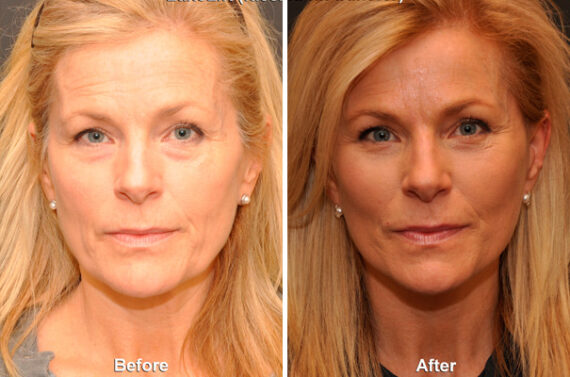
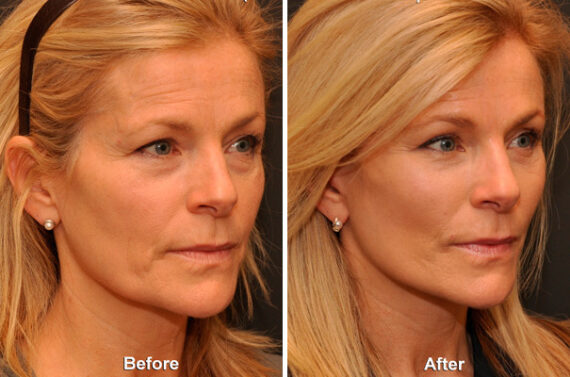
Each patient is unique and individual results may vary*.
What If You’re Not Ready Yet? Alternatives to a Facelift Procedure
Not everyone is ready for plastic surgery, and that’s perfectly fine. For those who want to enhance their appearance without committing to a facelift, there are several effective, non-surgical options available. These treatments can address mild to moderate signs of aging and help you maintain a youthful look while delaying the need for surgery.
Here are some popular alternatives to a facelift:
- Dermal Fillers: Add volume to areas like the cheeks, under-eyes, and nasolabial folds to smooth lines and restore youthful contours.
- Botox: Temporarily relaxes facial muscles to reduce the appearance of dynamic wrinkles, especially on the forehead and around the eyes.
- Laser Skin Resurfacing: Improves skin texture and tone by stimulating collagen production, helping reduce fine lines, sun spots, and acne scars.
- Thread Lifts: A minimally invasive option that uses dissolvable threads to lift sagging skin, offering subtle lifting results without surgery.
These alternatives can be great interim solutions or complementary treatments for those not quite ready for facial surgery.
Internationally Renowned
EXCELLENCE IN FACIAL COSMETIC SURGERY
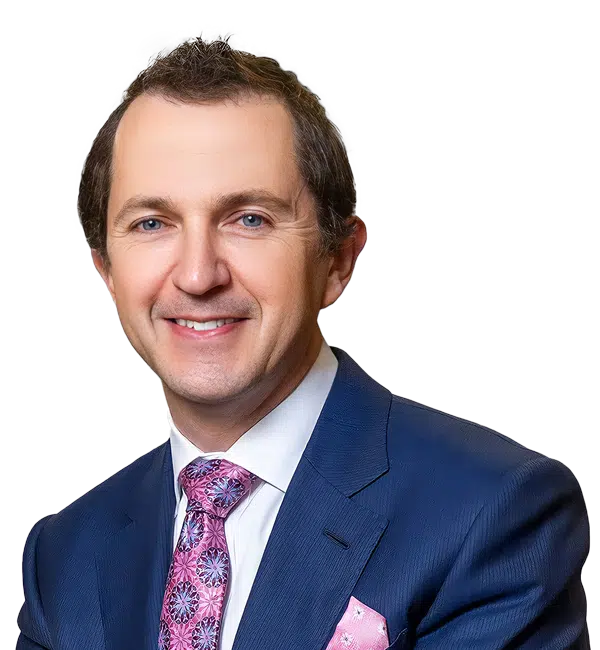
About Dr. Alexander S. Donath
This article was medically reviewed for accuracy by Dr. Alexander S. Donath, MD, FACS, a double board-certified facial plastic surgeon and director of Cincinnati Facial Plastic Surgery.
Credentials & Expertise
- Double Board-Certified: American Board of Facial Plastic & Reconstructive Surgery and the American Board of Otolaryngology–Head and Neck Surgery
- Facial Rejuvenation Specialist: Extensive experience in facelift surgery, facial aging, and advanced rejuvenation techniques
- National Trainer & Educator: Trains physicians in injectable treatments and facial aesthetic procedures
Education & Training
- Medical degree, University of Cincinnati College of Medicine
- Residency in Otolaryngology–Head and Neck Surgery, St. Louis University School of Medicine
- Fellowship in Facial Plastic & Reconstructive Surgery through the American Academy of Facial Plastic and Reconstructive Surgery
Clinical Approach
Dr. Donath takes a personalized, anatomy-driven approach to facial rejuvenation, focusing on natural-looking results. He evaluates each patient to determine the most appropriate timing and technique for facelift procedures.
Work With an Expert Facial Plastic Surgeon
Choosing the right specialist for your facelift is essential for achieving safe, natural-looking results. Experience matters greatly, especially in facial procedures where precision, artistry, and an understanding of facial anatomy make all the difference. A skilled facial plastic surgeon will not only guide you through the best age and approach for your facelift but will also tailor the procedure to match your unique facial structure and aging pattern.
Dr. Alexander S. Donath brings over 10 years of experience and advanced fellowship training from one of the world’s most prestigious programs in facial plastic and reconstructive surgery. Widely recognized as a Top Doctor in Cincinnati, Dr. Donath blends technical excellence with aesthetic vision to deliver results that look refreshed, not overdone. Ready to take the next step? Call us at 513-891-5438 or visit our contact page to schedule your consultation today.