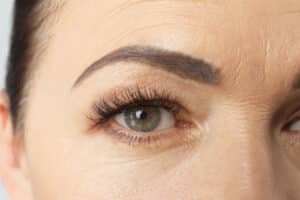

Blepharoplasty - Eyelid Surgery
Blepharoplasty, or surgery of the eyelids, is a plastic surgery procedure which can improve the appearance of droopy upper eyelids and puffy undereye bags. The surgery restores a more youthful and refreshed appearance to the eye area by removing excess fat, muscle and skin from the upper and/or lower eyelids.
Individuals who are looking to improve sagging or puffiness of the eyelids may be good candidates for blepharoplasty. As with other types of cosmetic surgery, patients must also be realistic in their expectations for the outcome and be in good health. Patients should also understand the limitation of blepharoplasty surgery. The procedure cannot improve the appearance of dark circles, sagging eyebrows or fine lines and wrinkles around the eyes. Special considerations may need to be made for individuals with circulatory, ophthalmologic, or other serious medical conditions. During your consultation, Dr. Donath will help you to decide if blepharoplasty is right for you. He may recommend complementary surgery to help you achieve your desired look. For instance, blepharoplasty is often performed along with a browlift, facelift or skin resurfacing,
Local anesthesia with sedation or general anesthesia may be used for the blepharoplasty surgery. Dr. Donath will begin by making the incisions which will be located along the natural lines and creases of the upper eyelids and along the lash line and smile creases of the lower eyelids. Working through the incisions, excess fat, muscle and loose skin will be removed and fine sutures will be used to close the incisions. A bandage may be applied to the eyelids once the surgery is complete. Transconjunctival blepharoplasty may be performed on patients with just eyelid puffiness caused by excess fat. For this procedure, the incisions are made on the inside of the lower eyelids and excess fatty tissue is removed. Surgical times for blepharoplasty will vary and can run anywhere from one to three hours.
Patients may experience some soreness and tightness of the eyelids which can be managed with prescription mediation. Dryness, itching, burning, tearing, sensitivity to light and blurred or double vision may also occur during the first week. Some swelling and bruising can be expected and can be reduced by applying cold compresses and elevating the head for the first few days after surgery. You will also be required to apply an ointment to the eye area to help prevent dryness and eye drops may be recommended as well. Traditional stitches are removed within three to five days while self-absorbing stitches will dissolve on their own and need not be removed. The incisions are typically placed to allow the resulting scars to be as inconspicuous as possible. Most patients are able to return to work within five to ten days after undergoing blepharoplasty, though rigorous activities will be prohibited for several weeks.
Read frequently asked blepharoplasty questions.
|