

Facial fat transfer has become an important tool for restoring youthful facial volume, especially for patients who want natural, lasting results without relying solely on dermal fillers. While early improvements are often soft and subtle, many people wonder how the procedure holds up five or more years later. For patients in Cincinnati and Dayton, long-term expectations matter just as much as the initial recovery.
Below is a clear look at facial fat transfer after five years—how long results last, what changes over time, and when to consider maintenance treatments or a consultation.

What to Know at a Glance
- Many patients maintain long-lasting facial volume five years after fat transfer.
- Some volume change is normal as fat cells settle and the face continues to age.
- Side effects after five years are uncommon and usually related to natural aging or weight fluctuations.
- Healthy lifestyle habits and good skincare help support long-term results.
- A consultation with a facial plastic surgeon can determine whether touch-ups or complementary treatments would help.
How Facial Fat Transfer Works
Facial fat transfer—also referred to as fat grafting or autologous fat injection—uses your own fat to restore volume to areas such as the cheeks, temples, nasolabial folds, and under-eye hollows. Fat is harvested from a donor area, refined and then placed into facial zones where volume has diminished.
Because the material is your own tissue, there is no risk of allergy, and the transferred fat integrates into the surrounding structures as living cells. When a portion of these cells successfully establish a blood supply, they can remain for many years—forming the basis of long-term facial fat transfer results.
Fat Cell Duration and Early Longevity
A percentage of transferred fat becomes permanent, while the rest gradually absorbs during the early healing period. The fat that survives establishes a blood supply and functions like natural facial fat, forming the foundation for long-term fullness. This early survival phase largely shapes how full the results appear in the years that follow.
Facial Fat Transfer Results After 5 Years: What Typically Remains
Stable Volume for Many Patients
At the five-year mark, most patients still retain a meaningful portion of their improved facial volume. The fat cells that survived the initial healing period behave like the fat elsewhere in the body—soft, natural, and responsive to overall weight changes.
Why Some Change Is Normal
Even with excellent survival of the transferred fat, the face continues to age. Skin quality, collagen support, bone structure, and natural facial fat all evolve over time. As a result:
- Some areas may appear slightly less full five years later
- Minor asymmetries may become more noticeable
- The natural aging process can create new areas of hollowness
These changes are due to aging, not a failure of the fat transfer, and are expected even after successful facial procedures.
Long-Term Side Effects: What’s Possible, What’s Uncommon
By the five-year point, direct side effects from the original fat transfer are rare. However, the following may occur in some patients:
Mild Contour Irregularities
Small irregularities or unevenness can appear over time as fat settles or as natural facial fat changes. These are usually subtle and can often be improved with targeted fillers or touch-up fat grafting.
Changes Related to Weight Fluctuations
Because transferred fat behaves like fat anywhere else in the body, significant weight gain or loss can alter facial volume. Stable weight supports stable long-term results.
Palpable Firmness in Isolated Spots
Although uncommon, some patients may feel small areas of firmness or nodularity years later. These are typically benign and can be addressed during a consultation if they become bothersome.
Internationally Renowned
EXCELLENCE IN FACIAL COSMETIC SURGICAL
How Skin Aging Affects Results After 5 Years
The longevity of facial fat transfer doesn’t depend on fat cells alone—skin health plays an important role. Over time, UV exposure, collagen loss, and natural tissue changes affect how fullness appears on the surface.
Key Factors That Influence Appearance at 5+ Years
- Sun exposure and environmental stressors can thin the skin over time
- Loss of elasticity may create additional sagging even with good volume
- Overall skin quality influences how smooth and youthful the contours appear
For many patients, healthy skincare products, sun protection, and in-office treatments help support skin quality and enhance the results of facial fat transfer long-term.
Fat Transfer vs. Dermal Fillers Over Time
Both fat transfer and dermal fillers restore facial volume, but their long-term behavior is different.
Durability
- Fat Transfer: Surviving fat cells can last many years and often remain stable beyond the five-year point.
- Fillers: Hyaluronic acid fillers gradually dissolve and typically require periodic maintenance.
Appearance
Fat provides a soft, natural look that mimics youthful facial fullness. Fillers can provide precise, targeted correction and are often used to refine results.

Maintenance
Even with long-lasting volume, some patients choose dermal fillers as a finishing touch to restore fine contours or address new areas of aging.
Combining Fat Transfer With Other Procedures Over Time
For patients interested in the most natural and comprehensive rejuvenation, facial fat transfer is often combined with other procedures. Dr. Donath may incorporate fat grafting in conjunction with the Luxelift, his advanced facelift technique.
Common Long-Term Pairings
- Facelift surgery for lifting and tightening
- Skin resurfacing to improve texture and sun damage
- Neuromodulators or fillers for fine adjustments or new concerns as aging continues
Touch-ups or complementary procedures do not indicate a failure of the original fat transfer—they reflect the natural evolution of the face.
Before & After Photos
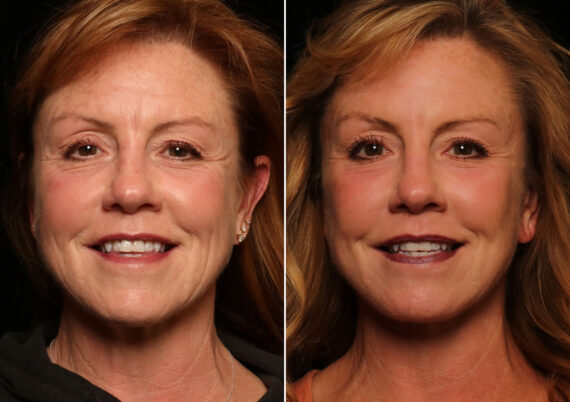
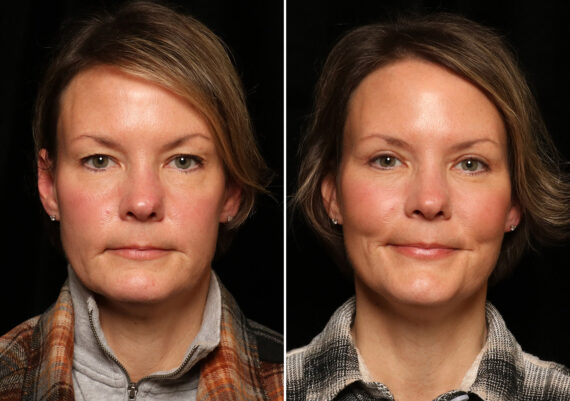
Each patient is unique and individual results may vary*.
Tips and Insights for Supporting Long-Term Results
Healthy habits can help keep facial fat transfer results looking their best five years and beyond:
Maintain a Stable Weight
Large weight fluctuations can make the transferred fat expand or shrink, altering contours.
Protect Your Skin
UV damage affects how the surface of the skin drapes over restored volume. Daily sun protection is essential.
Use a Healthy Skincare Routine
A consistent regimen supports the skin’s regenerative response and helps prevent premature aging.
Follow Up as Needed
Periodic reassessment helps identify areas where minor aging-related changes may benefit from additional treatments.
Support Overall Health
Quality nutrition, hydration, and sleep benefit both skin and soft tissue over time.
When to Consider a Touch-Up or Additional Treatment
Five years after facial fat transfer, some patients simply enjoy their results with no changes needed, while others may choose additional refinement.
You may benefit from a touch-up if you notice:
- New facial hollowness from natural aging
- Uneven or partial volume loss
- Changes related to significant weight fluctuation
- Desire for additional, subtle enhancement
- Skin changes that make contours look less defined
During a consultation, Dr. Donath evaluates facial volume, symmetry, skin condition, and your goals to determine whether a touch-up, fillers, skincare, or another procedure might be helpful.
Consultation in Cincinnati & Dayton
A long-term assessment is one of the best ways to understand how your facial fat transfer has aged and whether refinement can help you look your best. Dr. Donath provides personalized evaluations for patients from Cincinnati, Dayton, and the surrounding areas, offering guidance on fat grafting, other procedures, and the most effective ways to maintain youthful facial contour over time.
For patients considering fat transfer for the first time—or those evaluating their results years later—a consultation provides clarity and a tailored plan.